Monday, November 2, 2020

Behind the Front Lines With a Wildland Firefighting Hotshot Crew

Unless you’ve been living under a rock, you’ve heard the word countless times this summer and fall: wildfire. And yet, past the occasional snippet in our flash-in-the-pan news cycle, most people don’t know much of anything about wildfire, not least of which is the badass, thankless work of wildland firefighters combating one of climate change’s most destructive forces. Filmmaker Matthew Irving wanted to change that, so when the Grizzly Creek Fire ripped through Colorado earlier this year, Irving grabbed his camera.

MEN’S JOURNAL: Why is telling this story, giving attention to the work of wildland firefighters important?
MATTHEW IRVING: I don’t think anybody really understands how hard hotshot crews work. Most media focuses on acres burned and structures destroyed, but behind the numbers are men and women working tirelessly behind the scenes to manage one of the most chaotic forces of nature.

A typical hotshot crew works 16-hour days for two weeks straight with two days off. They’ll usually get the more complex assignments and work their asses off, ending the day with a caloric deficit. You don’t really get in shape throughout the season. It’s more like you show up in shape at the beginning of the season, then spend the rest of the summer wasting away until you’re a shell of a human.

Family stargazing by a campfire, Colorado Rockies

How to Safely Camp and Recreate During Wildfire Season

Read article

Can you break down what is happening in the film?
In the first half, the Alpine Interagency Hotshot Crew (Alpine IHC) is seen going indirect, which means creating a line far away from the head of the fire, and burning off a chunk of it, so that when the main fire arrives, it has a big buffer of black that it can’t jump. The second half of the story has Ruby Mountain IHC going direct, which means that fire activity has died down enough on this specific division that they’re able to hike in a few miles to the fire line, and try to keep it in check—using helicopters, chainsaws, and hand tools. This tactic isn’t possible when the fire is actively making a run in the timber. When that happens, there really isn’t anything anyone can do, other than pull back to a safety zone and reassess options.

As people build more homes in the wildland urban interface (WUI), managing wildfires becomes more problematic. Fires that would normally be allowed to burn now have to be suppressed, which causes a buildup of fuels, which leads to more extreme fire behavior, which leads to wildland firefighters unnecessarily putting their lives on the line to save shitty-ass mansion. It’s a difficult cycle to break.

What was the most daunting part of filming? Any scary or surprising moments?
When I was younger, I worked on several hotshot crews during the summer, so I’ve seen my fair share of crazy fire activity. Some of the scenes that appear to be sketchy are actually quite controlled, but that’s something that you wouldn’t be able to tell unless you’ve spent a lot of time out on the line. As boring as this sounds, the two most difficult aspects of filming wildland fires are getting access and reassuring the crews that you’re not a total idiot.

The majority of content you see in the media is filmed roadside, and that’s something that I’ve always hated. You don’t ever get to see hotshot crews in their element, which is typically in the backcountry on all the hardest assignments. I get why reporters aren’t usually allowed out with crews, because it isn’t always the safest, but it doesn’t paint a very accurate picture of the hard work they’re putting in.

san francisco

It's Looking Smoky Outside—When Is it Safe to Exercise?

Read article

Gaining the crew’s trust in such a short amount of time was one of the more stressful aspects of filming. I’m sure I sounded like an idiot when I’d introduce myself and immediately mention that I used to be on a hotshot crew, but the mentality on hotshot crews is if you have a camera and a fresh yellow Nomex shirt, you’re probably an idiot. At least, that’s how I felt back when I was on a hotshot crew. Did I mention I was on a hotshot crew? I was. I also climbed Mount Everest.

How did you come up with the idea?
Admittedly, this short is an ode to the first few minutes of The Fall, a film by Tarsem Singh that is one of the most beautiful pieces of cinematography on the planet. I saw it shortly after it came out back in 2006 and it has sat with me ever since. For me, it’s easy to see how something as chaotic as wildfire would work perfectly with Beethoven’s Symphony No. 7 in A major, Op. 92.

As pretentious as this sounds, I just wanted use the footage in a way that spoke to me. The bulk of what I filmed will be used to update government training videos, websites, etc., so being allowed to create a short film of something I’ve been passionate about for 20 years was really meaningful.

Santa Rose California forest fire

On the Front Lines of America's War on Fire

Read article


from Men's Journal https://ift.tt/3kYabUg
via IFTTT

For Some, 'COVID Toes,' Rashes Can Last for Months

photo of coronavirus

Some patients in the study saw symptoms ease within 15 days. But for others, problems lingered for up to four months.


from WebMD Health https://ift.tt/3mHTpZV
via IFTTT

Flu Shot May Shield You From Severe COVID

gloved hand with syringe of flu vaccine

The flu vaccine also appears to significantly reduce a COVID-19 patient's risk for ending up in an intensive care unit (ICU), researchers say.


from WebMD Health https://ift.tt/2Gl6FEa
via IFTTT

Aetna, city of New Haven hit with OCR fines after data breach

The fines are the latest effort on OCR's part to enforce HIPAA regulations around protected health information.

from News from healthcareitnews.com https://ift.tt/3ek1LDT
via IFTTT

Aetna, city of New Haven hit with OCR fines after data breach

The fines are the latest effort on OCR's part to enforce HIPAA regulations around protected health information.

from Most Popular News from healthcareitnews.com https://ift.tt/3ek1LDT
via IFTTT

Why a Dark Sky Area Should Be Your Next Road Trip Destination

It’s hard not to feel small in a place like Westcliffe, CO. With the Sangre de Cristo Mountains to the west and the Wet Mountains to the east, you can spot several 14,000-foot peaks—including Crestone Needle and Crestone Peak—from nearly any point in the Wet Mountain Valley. As stunning as that panorama is during the day, I came to Three Peaks Ranch—a family-owned and- operated private ranch just 15 minutes out of town—not for the mountain views, but for the nighttime sky.

Family stargazing by a campfire, Colorado Rockies

How to Safely Camp and Recreate During Wildfire Season

Read article

Westcliffe is one of just 28 “dark sky” communities in the world certified by the International Dark Sky Association for showing exceptional dedication to the preservation of the night sky. That’s done through the implementation and enforcement of a quality outdoor lighting ordinance, dark sky education, and citizen support of dark skies. It’s a label that not only honors what communities have done to protect and preserve, but aims to make other people aware of what they’re missing.

“People have become so casual about using a lot of light at night, and in most big cities, the night sky is lost and has been for decades,” says John Barentine, Ph.D., director of public policy at the International Dark Sky Association. “But in places like Westcliffe, they want to keep what they have, and we want to show that it is possible to do that—or to even reverse the trend—through simple acts.”

Barentine’s statement that the night sky is lost is not an exaggeration: In fact, the Milky Way is basically invisible to 99 percent of the population of the United States, according to research published in the journal Science Advances.

Everglades National Park covers 1.5 million acres, the largest park in the Lower 48.

Kayaking Across Everglades National Park Shows Why It’s Worth Saving

Read article

The fact that majority of Americans step outside at night, look up, and don’t see what they expect to see intersects with rising interest in experiential travel. It’s no longer enough to drive to the Grand Canyon and stand at the rim, says Barentine. “People are looking for added value, something that’s out of the ordinary,” he explains. “In the national parks, for example, if you don’t stargaze while you’re there, you’re missing half of the attraction.”

Those two factors have led to a surge in astrotourism—traveling to see the stars, the skies, and space. In 2017, 21 million adults traveled to a different location in the U.S. to watch the solar eclipse, according to the University of Michigan’s Institute for Social Research; travel companies like Intrepid and Upscape are currently offering vacation packages to view the total solar eclipse that will take place on December 14, 2020 over Chile and Argentina (although COVID-19 may put a damper on tourism).

On Airbnb, there are nearly 7,700 home listings that offer telescopes as an amenity, according to a company spokesperson—that’s a 156 percent increase since 2018. More than 12,000 guest reviews mention “stargazing,” “watching the stars,” and “telescopes.”

Even with COVID-19 travel restrictions still in place, Barentine predicts interest in astrotourism will continue to rise. “Being stuck at home has really brought a lot of people’s attention to their lack of night sky for the first time, and they’ve realized they’re going to have to get away from home to experience it,” he says. While you may not be able to fly to the farthest-flung Dark Sky areas, it’s easy enough to drive somewhere away from bright city lights.

Drew Smith rock climbing

Drew Smith on Chasing ‘Cheap Thrills’ and Becoming a Professional Adventure Phot...

Read article

In June, AAA forecast that Americans would take 700 million road trips through the end of September; in mid-October, they anticipate that 80 percent—the vast majority—of trips this fall will be road trips. And as social distancing guidelines remain in place, travelers are looking for off-the-beaten-path destinations that offer seclusion without sacrificing adventure.

That makes Westcliffe a perfect spot for astrotourism. It’s a three-hour drive from Denver (the AAA’s top road trip destination for fall), its population hovers just above 600, and rental properties span acres of the valley, offering 360-degree views of the night sky (as well as easy access to daytime activities, like summiting the five 14,000-foot peaks nearby).

Westcliffe’s Smokey Jack Observatory opened in 2015. But Suzanne B. Jack (AKA Smokey Jack) had been campaigning for decades to protect the area’s night skies. As the founder of the non-profit Dark Skies of the Wet Mountain Valley, she first convinced the local hospital to use dark sky-friendly lighting fixtures. Since then, the organization has helped bring the entire town around to light pollution control, education, and awareness via art contests, publications included with building permit packets, presentations at local organizations, and star parties.

Chris Burkard, Emily Batty, Adam Morka, and Eric Batty completing a self-supported bike packing traverse of Iceland from east to west coast.

Chris Burkard on the First Bike Traverse of Iceland’s Interior

Read article

The observatory itself is a small, 12-foot by 12-foot hut with a retractable roof, which houses a 14-inch Schmidt-Cassegrain telescope with computer-guided pointing and tracking. Normally, it hosts star parties throughout the year, as well as private viewing; all viewings, however, have ceased through at least the remainder of 2020 due to the pandemic (in the meantime, you can stargaze through their scope on Facebook Live). As educational as it is to have observatory director Steve McAllister, or one of the other trained star guides, pointing out constellations, planets, and galaxies with a laser pointer and providing close-up looks through the telescope), it’s easy enough to get a taste of the experience on your own in the meantime. All you have to do is look up. (Google helps, too.)

After peering at the North Star, the Big Dipper, Jupiter, Saturn, and several galaxies from the observatory, I sat outside the cabin at Three Peaks Ranch and stared up while fiddling with my camera. It was almost scarily quiet, and so dark I couldn’t adjust the camera dials unless I turned on my cell phone flashlight.

I wanted to capture the night sky—to bring a reminder of the stars back to Denver with me—but mostly I wanted to capture the experience. After months stuck inside my apartment’s four walls, and countless hours exposed to the artificial light of too many screens, to look up and just see starlight was a welcome respite from the overstimulation of life at home.

There are real benefits to seeking less light, too. Research shows that bright artificial lighting (indoors and out) negatively affects sleep and mood, and may even increase the risk of disease. People who live in areas with more outdoor nighttime lights reported delayed bedtimes and wake up times, shorter sleep duration, and increased daytime sleepiness, as well as increased dissatisfaction with sleep quantity and quality, according to a 2016 study published in the journal Sleep.

Rock Climbing City of Rocks

Keeping Pandemic Precautions in Mind During Group Outdoor Adventures

Read article

At one point, wide open skies and stargazing may have been a luxury selling point for far-flung destinations like !Ae!Hai Kalahari Heritage Park in South Africa or the Pitcairn Islands in the Pacific Ocean, dark sky sanctuaries that are, by nature, the most remote (and often darkest) places in the world; or protected dark sky reserves like Alpes Azur Mercantour in France and NamibRand Nature Reserve in Namibia. Now, it’s something anyone would crave after being cooped up for months.

And if there’s one thing we’ve learned in the past eight months, it’s that adventure can be found closer to home. Twenty-two of the IDA’s 28 dark sky communities are within the U.S., and dark sky parks are scattered across the country, from Tonto National Monument outside of Phoenix, AZ, to Cherry Springs State Park in Pennsylvania’s Susquehannock State Forest.

“People are looking for new experiences that aren’t the kind of conventional travel we’re familiar with,” says Barentine. “And so this need to seek out the stars has been fueled by the realization that they’ve been there the whole time—we just haven’t been paying attention.”


from Men's Journal https://ift.tt/384Mmq8
via IFTTT

Defusing the “Benadryl challenge”: Discussing danger with teens

Let’s start with the bottom line: Parents of teens need to help them understand that just because they have been “challenged” to do something doesn’t mean it’s a good idea. But as simple as that sounds to us, it’s tough for many teens to grasp.

The latest challenge in the news is the “Benadryl challenge” that appeared on TikTok, a popular social media video platform. The idea was to take a whole lot of Benadryl (diphenhydramine, a common antihistamine) in order to cause a high, with hallucinations. While it’s true that diphenhydramine can make you high and make you hallucinate, when you take too much of it you can also have seizures, pass out, have heart problems, or even die. And indeed, emergency rooms across the country have treated overdoses of diphenhydramine, and at least one death has been attributed to the challenge.

Dangerous challenges appeal to teens

To TikTok’s credit, they say that they have taken down the videos and are monitoring for any new ones. When I searched the site myself, nothing came up when I searched “Benadryl.” But it’s not like it’s the only challenge out there on social media. We’ve had the cinnamon challenge, the nutmeg challenge, and others like the “Kiki challenge” where people get out of their slow-moving cars and dance alongside them, or the “skull-breaker challenge” which, well, speaks for itself. Getting rid of all challenges is not really possible; it’s a game of whack-a-mole.

The reason teens do this stuff is actually rooted in evolutionary biology. The adolescent and young adult brain is growing and changing rapidly to meet the needs of their particular moment in life. As teens enter adulthood and become independent, they need to be able to learn a lot of information quickly. Their brains are set up to help them do that.

Entering adulthood and becoming independent also requires being brave and taking risks. There is so much that is new and scary as you enter adulthood, which is why many of us are glad we are past that part of life. The development of the adolescent brain takes that into account, too: the last part of the brain to develop is the prefrontal cortex, the part that helps us control our impulses and avoid risk. By the mid-20s or so, the process is complete.

Working with the teen brain

This doesn’t mean that parents, teachers, and others should just throw up their hands and quit trying to talk to teens about making safer decisions. We absolutely need to keep trying, day after day. But it does mean that we have to understand why these challenges may have so much appeal, and why teens may not fully appreciate the risks. It means that our efforts need to be not just ongoing, but understanding. We need to work with the teen brain, not against it.

There’s no easy way to do that. But here are some ideas:

  • Listen as much as you talk. Ask questions. The more you understand about their behavior, the better chance you will have of finding strategies that work.
  • Don’t jump to judgment. Besides the fact that they are wired to make impulsive and sometimes dangerous decisions, if teens feel judged they are less likely to listen to anything you have to say.
  • Try to engage your teen in coming up with ideas to keep him or her safe. Not only do they know themselves and their peers better than you do, they may be more invested in an idea they come up with themselves.
  • Ask for help. Teens don’t always listen to parents, but they may listen to other adults in their lives. And definitely, if you feel like your child is doing things that are dangerous and you can’t stop them, talk to your doctor.

Follow me on Twitter @drClaire

The post Defusing the “Benadryl challenge”: Discussing danger with teens appeared first on Harvard Health Blog.


from Harvard Health Blog https://ift.tt/3elBvJC
via IFTTT

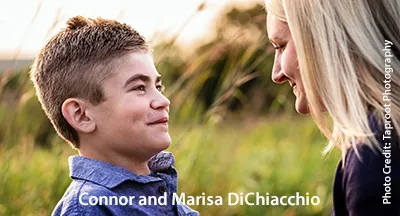
Boy With Alzheimer's-like Illness Races For Time

photo of connor and marisa dichiacchio

The boy already has lost some of what he's learned in his short time on Earth, and every day he loses a little more.


from WebMD Health https://ift.tt/2HTEvke
via IFTTT

Covid-19 news: Earlier lockdown in England would have ‘saved lives’

The latest coronavirus news updated every day including coronavirus cases, the latest news, features and interviews from New Scientist and essential information about the covid-19 pandemic

from New Scientist - Health https://ift.tt/34MBJWS
via IFTTT

Coronavirus lockdown: PM warns UK faces 'medical disaster' without action

Boris Johnson told MPs he was "right to try every possible option" before telling people to stay at home.

from BBC News - Health https://ift.tt/2HWPN7j
via IFTTT

Temple uses $1M of FCC telehealth funding for virtual care platform, tablets and more

By centralizing access to specialty care, consults and outpatient appointments, Temple University Hospital has seen an increase in appointment adherence and overall patient experience.

from Most Popular News from healthcareitnews.com https://ift.tt/2HWFvnG
via IFTTT

Temple uses $1M of FCC telehealth funding for virtual care platform, tablets and more

By centralizing access to specialty care, consults and outpatient appointments, Temple University Hospital has seen an increase in appointment adherence and overall patient experience.

from News from healthcareitnews.com https://ift.tt/2HWFvnG
via IFTTT

Covid: Target 'hit' for 500,000 tests a day in the UK

Network of mega-labs and use of over 100 small labs increases capacity for testing.

from BBC News - Health https://ift.tt/38ahu7L
via IFTTT